How Churches Can Save Money, Reduce Waste, and Build Community with a Dedicated Equipment Marketplace
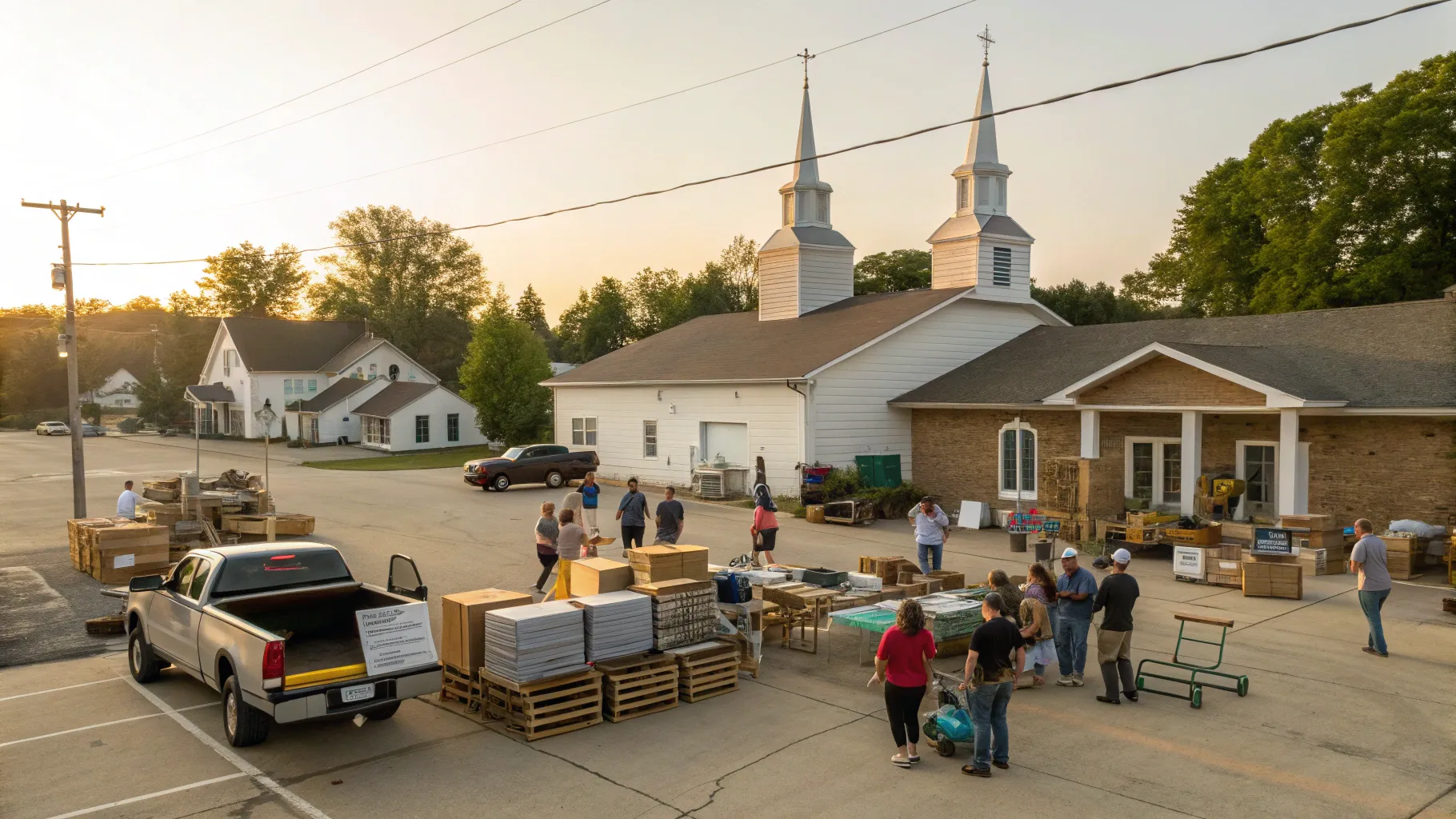
Every church leader knows the tension: ministries need reliable equipment, but budgets are tight. Pastors, worship leaders, and admin teams regularly face the same questions—where to find affordable pews, how to upgrade a sound system without breaking the budget, or what to do with surplus furniture gathering dust in a storage room. At the same time, many congregations sit on items that would be a blessing to other ministries.
A dedicated church equipment marketplace changes this dynamic. It helps churches buy, sell, donate, or give away items to other churches nearby. This is not just a thrift store for ministries; it is a practical tool for faithful stewardship, sustainability, and relationship building across local church networks.
Why a Church Equipment Marketplace Matters
Churches operate under finite resources and infinite needs. New furniture, sound equipment, lighting rigs, and kitchen appliances are costly. Yet the church has a long tradition of mutual aid—sharing resources so the work of ministry can go forward. A focused marketplace channels that impulse into something intentional and efficient.
Consider the difference between buying new and tapping into a church-focused resale or donation network. The first option often strains budgets and slows ministry plans. The second option enables smaller congregations to thrive, frees up funds for mission work, and reduces waste. A church equipment marketplace helps leaders practice stewardship with tangible results.
Four core reasons this approach is powerful
- Financial stewardship: Stretch limited budgets by finding quality used items at a fraction of new cost.
- Environmental impact: Reduce waste by reusing and repurposing functional equipment.
- Kingdom relationships: Build trust and practical partnerships between neighboring churches.
- Community blessing: Help smaller and newer ministries get up and running faster with fewer barriers.
Three Simple Models for Sharing Church Resources
A well-designed church equipment marketplace operates on three straightforward models. Each serves different needs while keeping the focus on ministry outcomes.
1. For Sale Transactions
Selling used church supplies on a marketplace is ideal when a congregation upgrades or consolidates. Churches frequently replace pews, chairs, pulpits, or electronic systems and can recover part of their investment by listing those items.
Benefits of for-sale listings:
- Recover funds to invest in current ministry priorities.
- Get equipment into hands that will continue to use it for ministry.
- Make upgrades more affordable for both buyer and seller.
2. Donation Opportunities
Donations are a core expression of the church’s generosity. Listing items to give away to another church allows resources to move where they are needed most. Many marketplaces enable donors and recipients to attach a supporting donation to the transfer, strengthening the church-to-church relationship.
Donation options typically include:
- Listing items as free but encouraging a goodwill donation to the providing church.
- Offering large items with suggested donor contributions to help cover transport or refurbishment costs.
- Recipient churches arranging pickup at a convenient time for both parties.
3. Free Exchange
Sometimes the most powerful giving is unconditional. Free exchanges allow churches to offer items without price, removing barriers for small ministries that need chairs, books, or décor. Many churches arrange free pickup for large items such as pews or kitchen equipment.
Free exchanges strengthen local ties and demonstrate a theology of abundance rather than scarcity.
Popular Categories Churches Look For
When churches search for equipment, certain categories consistently appear as high demand. Focusing on these helps buyers find what they need and sellers know what will move quickly.
Furniture
Church pews for sale, stacking chairs, folding tables, pulpits, and office furniture are some of the most commonly traded items. These pieces are durable and often still in excellent condition after years of use.
Electronics and AV
Used church lighting equipment, sound systems, projectors, and microphones are expensive when new but frequently available gently used. Upgrading a soundboard or adding stage lighting can transform Sunday worship—at a fraction of the new cost through resales or donations.
Musical Instruments
Pianos, organs, guitars, and percussion instruments often change hands when churches combine or change worship styles. Instruments can be costly to purchase but incredibly impactful for worship and community programs.
Kitchen and Fellowship Equipment
Commercial-grade appliances, serving wares, and tables for outreach events are practical items that smaller ministries might not afford new. Sharing kitchen equipment empowers food ministries, community dinners, and hospitality efforts.
Books and Educational Materials
Sunday school curriculum, theological books, and resource materials frequently pile up. Passing these on is one of the simplest ways to bless another ministry.
How a Local Focus Strengthens the Network
Search terms like "church equipment near me" highlight an advantage to keeping trades local. Proximity makes pickup and delivery simpler and creates opportunities for deeper collaboration.
Local exchanges reduce transportation costs and make scheduling easier. More importantly, they invite face-to-face interaction, which builds trust. A simple furniture pickup can turn into a conversation about children’s ministry needs, outreach partnerships, or joint community events.
Practical benefits of local exchanges
- Easier logistics for large items like pews or appliances.
- Faster turnaround when a church needs to replace or acquire equipment quickly.
- Greater likelihood of follow-up collaboration and mutual support.
Getting Started: A Simple Roadmap for Churches
The process of buying, selling, or donating should be straightforward. A marketplace designed for churches makes it easy. Below is a practical roadmap you can follow right now.
- Take stock. Create an inventory of items you no longer use or items you need. Include dimensions, condition, and photos where possible.
- Decide your goal. Are you selling to recover funds, donating to bless another ministry, or offering items for free to remove barriers?
- Create a clear listing. Provide honest descriptions, clear photos, and any necessary details such as pickup requirements and suggested donations.
- Set logistics. Arrange pickup or delivery, or offer to help coordinate transport for larger items.
- Follow up. After the exchange, maintain contact. This relationship could lead to future partnerships.
An online platform geared to churches streamlines these steps and surfaces matches in your region. One example of such a resource is give2bless.us/" target="_blank">Give2Bless. Visit give2bless.us to browse listings, post items, and connect with other churches.
Key Benefits of Church Resource Sharing
Sharing equipment between churches offers many concrete advantages that go beyond saving money. These benefits ripple through ministries, congregations, and communities.
1. Financial Stewardship
Budgets are rarely as flexible as ministry leaders would like. Reallocating funds from equipment purchases to mission work, staff development, or local outreach has a multiplying effect. Buying used allows churches to direct more resources toward ministry impact.
2. Environmental Stewardship
Reuse prevents functional items from becoming landfill. When congregations intentionally repurpose furniture, instruments, and electronics, they practice creation care in a practical way.
3. Relationship Building
Transactions become ministry opportunities. Delivering a donated piano or helping a small church install a soundboard often leads to shared events, volunteer exchanges, and deeper trust across congregations.
4. Empowering Smaller Ministries
New church plants and small congregations especially benefit. Access to used church lighting equipment, affordable pews, or basic kitchen gear removes hurdles and accelerates community outreach.
Practical Tips for Successful Transactions
Whether you are buying, selling, or donating, following a few best practices will protect both parties and ensure items move smoothly into use where they are needed most.
1. Be honest about condition
Clear, honest descriptions prevent misunderstandings. If a soundboard needs a repair or a pew has scuffs, list those details up front. Honesty builds trust and reduces wasted time.
2. Take clear photos
Photos are your best sales tool. Use bright, well-lit images from multiple angles. Include close-ups of any damage and pictures of labels or model numbers for electronics.
3. Communicate clearly about pickup and delivery
Clarify whether the buyer or recipient is responsible for pickup, whether there are stairs, tight doorways, or heavy lifting involved, and whether recommendations exist for transport. Offering to help coordinate moving for larger items can make the difference between a successful transfer and an item sitting unsold.
4. Document the transaction
Even with church-to-church goodwill, it is wise to document transfers. A simple written agreement noting the item, condition, agreed price or donation, pickup details, and contact information protects both congregations.
5. Build relationships beyond the transaction
Use exchanges as an opportunity to learn about the other church’s needs and strengths. A delivery can become a conversation about shared outreach goals, volunteer opportunities, or joint events.
Examples of What Works Well
Real-life scenarios illustrate how a church equipment marketplace moves beyond the transactional to the transformational. Below are typical examples that occur when churches open their resources to each other.
- A mid-sized church upgrading its worship space lists its older but serviceable soundboard for sale. A nearby church buys it at a fraction of the price and receives informal training from the seller’s audio tech. The two congregations later co-host a community concert.
- A small rural church donates a gently used upright piano to a new church plant. The transporting church covers fuel costs as a donation, and the receiving church offers the donor a spot for their worship team at a future outreach event.
- An urban church clearing out storage lists dozens of folding chairs for free pickup. A community center connected with a neighborhood ministry collects them, saving rental costs for upcoming events and strengthening ties with the providing congregation.
Addressing Common Concerns
Some church leaders hesitate to participate in equipment exchanges because of concerns about liability, quality, or the time required. These are valid considerations and manageable with simple policies.
Liability and Safety
When transferring large or technical items, clarify responsibility for installation and use. Consider a short disclaimer in the transfer document that the providing church is donating or selling the item "as is" and that the recipient is responsible for installation and safety inspections where necessary.
Quality and Suitability
Not every item is a good match for every ministry. Detailed photos and honest descriptions reduce mismatches. For electronics, include model numbers and testing notes. For furniture, include measurements and photos of how items fit in their current space.
Time and Effort
Listing items and coordinating pickup takes time, but the investment often results in faster ministry resourcing and less clutter. Consider asking volunteers, youth groups, or small groups to assist with inventory and pickups as service projects.
How to Make Your Listings Stand Out
Standing out in a marketplace is not about flashy salesmanship; it is about clarity and trust. The following checklist will help items move faster and create positive interactions.
- Title clearly: Use searchable terms like "church pews for sale," "used church lighting equipment," or "donate church sound equipment."
- Lead with the most important info: Type, condition, model number for electronics, dimensions for furniture, and whether pickup assistance is available.
- Use professional photos: Clean the item and photograph in natural light from several angles.
- Set expectations: Note whether the price is firm, if donation boxes are accepted, and who coordinates transport.
- Include a short backstory: A sentence about why the item is available humanizes the listing and encourages connection.
Getting the Most Out of Give2Bless and Similar Platforms
A platform like Give2Bless is specifically built to connect churches in need of resources with churches that can provide them. Here are practical ways to leverage such a marketplace.
Use filters to find local matches
Search by location to find items near you. This reduces transport complexity and often leads to meaningful personal connections.
Follow categories relevant to your ministry
Subscribe or check regularly under categories such as "Furniture," "AV Equipment," "Instruments," and "Kitchen Supplies" so you can act quickly when something suitable appears.
Create thoughtful listings
Treat listings as invitations to relationship. Include contact information, preferred pickup times, and any flexibility the providing church can offer.
Encourage volunteers to participate
Moving pews or installing a soundboard is often a team project. Invite volunteers, youth groups, or men’s/women’s ministries to help with pickups as acts of service and fellowship.
Long-Term Impact: Beyond the First Transaction
When churches adopt an intentional resource-sharing ethic, the effects compound. Over time, networks of mutual aid can:
- Reduce duplicative spending across a region.
- Create shared ministry hubs where resources rotate based on seasonal needs.
- Enable coordinated outreach efforts that leverage pooled equipment for events, disaster response, or community programs.
- Foster intergenerational mentorship as technical skills like audio engineering are transferred between congregations.
These outcomes are more than operational efficiencies; they are expressions of how the church cares for one another and the world.
Practical Checklist Before You List or Accept an Item
Use this quick checklist to ensure smooth, responsible exchanges.
- Inventory and photograph the item honestly.
- Confirm dimensions and weight if relevant.
- Note any damage, repairs needed, or missing parts.
- Decide on price or donation expectation, including whether pickup costs will be covered.
- Prepare a simple written transfer agreement with signatures for larger transactions.
- Plan for safe transport and any required disassembly or reassembly.
- Follow up after the transfer to confirm the item arrived and is functioning as expected.
Stories of Transformation: What Shared Resources Make Possible
When resources flow freely among churches, ministries that were previously hampered suddenly thrive. Imagine a small church plant that lacked a keyboard finding a donated instrument from a neighboring congregation. Worship becomes richer, children learn new songs, and a partnership is born that leads to joint outreach events.
Or picture a community center that gains a set of folding tables and chairs at no cost. They can now host food distribution, classes, and community meetings without the rental fees that once limited their capacity.
These are not isolated wins; they are examples of communal care in action. Sharing church equipment becomes a practical theology—expressing love for neighboring congregations and the broader community.
How to Start Today
If your church has surplus items or needs equipment, begin with a small step. Inventory one room. Photograph three items. Post one listing. Ask a volunteer team to help coordinate pickup. Small actions build momentum.
For those ready to dive in, visit give2bless.us to explore active listings, post items, and connect with churches nearby. Whether you are looking for church pews for sale, used church lighting equipment, or a donated soundboard, an intentional marketplace makes it possible to resource your ministry wisely.
Frequently Asked Questions
Is donated or used equipment reliable?
Many donated items are well-maintained and fully functional. Always request photos, ask for model numbers for electronics, and, if possible, test equipment before finalizing a transfer.
Who pays for pickup or delivery?
It depends on the arrangement. Some donors ask recipients to cover transport costs; others include pickup assistance. Clarify logistics in the listing or during initial conversations.
What about liability if equipment fails?
Include a short "as is" statement in the transfer agreement. For technical equipment, suggest professional installation if required. Churches may consider basic liability coverage for volunteer movers.
How can small churches compete with larger congregations?
Being local and responsive helps. Small churches often succeed by staying active on platforms, responding quickly to listings, and building relationships that lead to prioritized offers from larger congregations.
Conclusion: Stewardship, Sustainability, and Service
A church equipment marketplace is more than a classifieds page; it is a practical expression of stewardship and community. By buying used, donating generously, and giving freely, churches can stretch budgets, reduce waste, and build deep connections with neighboring ministries.
Start small, be honest and generous, and look for ways each exchange can lead to deeper partnership. To explore listings or post items your church no longer needs, visit give2bless.us. The simplest donations often become the most meaningful blessings.
"When churches share what they have, they multiply their capacity to serve the community and strengthen the body of Christ."